


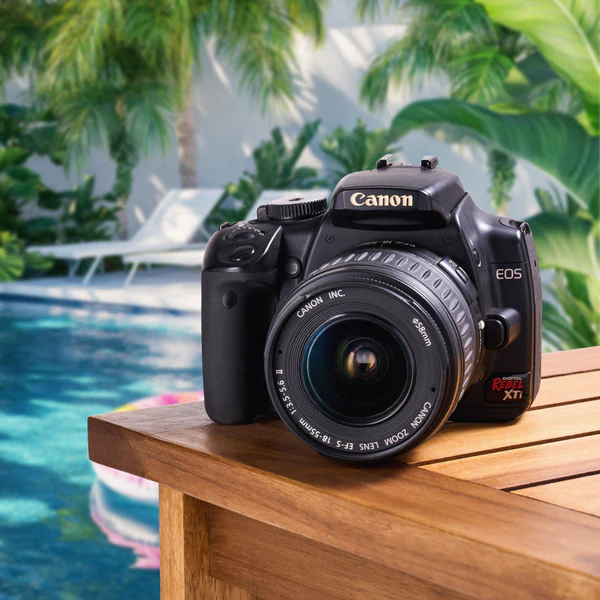
The camera Canon XTi, officially known as the Canon EOS Rebel XTi or EOS 400D, is one of the most important entry-level DSLR cameras ever released. Introduced during the early growth of digital photography, this camera helped thousands of beginners transition from compact cameras to professional-style photography.
Even though modern cameras now include advanced features like 4K video and wireless connectivity, the Canon XTi still holds value as a learning tool and budget-friendly DSLR. This detailed guide explains everything in simple and easy wording — including history, features, performance, advantages, limitations, and who should still consider using it today.
Introduction to Camera Canon XTi
During the mid-2000s, digital photography was rapidly evolving. Many users wanted better image quality than compact cameras could provide but were intimidated by professional DSLR systems. Canon addressed this need by creating beginner-friendly DSLR cameras under the Rebel series.
The camera Canon XTi became extremely popular because it combined advanced DSLR features with simple controls and an affordable price. It allowed beginners to learn manual photography while producing high-quality images suitable for prints and online sharing.
This camera played an important role in making DSLR photography accessible to everyday users.
Overview and History of the Canon XTi
The Canon XTi was released in 2006 as the successor to the Canon EOS Rebel XT (350D). Internationally, the same camera was marketed as the Canon EOS 400D and EOS Kiss Digital X in Japan.
At the time of its release, Canon improved several areas compared to earlier models:

- Higher resolution sensor
- Improved autofocus system
- Larger LCD screen
- Built-in dust reduction system
These upgrades positioned the camera Canon XTi as a strong competitor in the beginner DSLR market and helped Canon dominate entry-level photography sales during that era.
Key Specifications of Camera Canon XTi
Understanding technical specifications helps explain the camera’s capabilities.
| Feature | Specification |
|---|---|
| Camera Type | Digital DSLR |
| Release Year | 2006 |
| Sensor | APS-C CMOS |
| Resolution | 10.1 Megapixels |
| ISO Range | 100 – 1600 |
| Autofocus Points | 9-point AF system |
| Continuous Shooting | 3 frames per second |
| LCD Screen | 2.5-inch display |
| Storage | CompactFlash card |
| Lens Mount | Canon EF / EF-S |
| Battery | Rechargeable lithium-ion |
Although modest by today’s standards, these specifications were impressive for an entry-level DSLR at launch.
Design and Build Quality
The camera Canon XTi features a compact DSLR body designed specifically for beginners. Canon focused on creating a lightweight and comfortable camera that users could carry easily during travel or everyday photography.
The body is mainly constructed from durable plastic, reducing weight while maintaining reliability. Controls are clearly labeled, making it easier for new photographers to learn settings without confusion.
Unlike professional DSLR models, the XTi displays most settings on the rear LCD screen instead of a top display panel. This simplified design made operation more intuitive for first-time DSLR users.
Sensor and Image Quality Performance
Image quality remains one of the strongest aspects of the camera Canon XTi. The 10.1-megapixel CMOS sensor captures sharp images with natural color reproduction.
In good lighting conditions, photos show:
- Accurate colors
- Good contrast
- Clean detail levels
- Smooth tonal transitions
The camera performs best at lower ISO settings, producing clear images suitable for printing and editing. While low-light performance cannot compete with modern cameras, proper lighting and technique still produce excellent results.
RAW shooting capability also allows photographers to edit images extensively during post-processing.
Autofocus System and Shooting Speed
Canon equipped the XTi with a 9-point autofocus system, which was borrowed from higher-level models at the time. This improved focusing accuracy compared to earlier entry-level DSLRs.
The autofocus system supports different shooting situations:
- One-Shot AF for still subjects
- AI Servo AF for moving subjects
- AI Focus mode for automatic adjustments
Continuous shooting reaches approximately three frames per second, making it suitable for casual action photography such as sports or wildlife.
Canon Integrated Dust Cleaning System
One innovative feature introduced with the camera Canon XTi was the integrated dust cleaning system. Dust on camera sensors was a common issue when changing lenses, especially for beginners.
Canon addressed this by adding:
- Sensor vibration cleaning
- Anti-static coatings to reduce dust attraction
- Software dust removal mapping
This system helped maintain image quality without requiring frequent manual cleaning.
Lens Compatibility and Expandability
A major advantage of the Canon XTi is compatibility with Canon’s extensive lens ecosystem.
The camera supports:
- Canon EF lenses
- Canon EF-S lenses
- Many third-party lenses from Sigma, Tamron, and Tokina
This flexibility allows users to upgrade lenses over time without replacing the camera body. Different lenses enable creative photography styles such as portraits, landscapes, macro photography, and sports shooting.
Camera Modes and Shooting Controls
The camera Canon XTi includes multiple shooting modes designed to help users learn photography gradually.
Automatic modes allow beginners to capture photos easily, while semi-manual and manual modes introduce advanced control over exposure settings.
Users can experiment with:
- Aperture Priority for depth-of-field control
- Shutter Priority for motion capture
- Full Manual mode for creative photography
These options make the camera an excellent educational tool.
LCD Screen and User Interface
The 2.5-inch LCD screen was considered large at the time of release. It displays shooting settings, playback images, and menu options clearly.
The interface is simple and logically organized, helping beginners understand camera functions quickly. Playback features allow users to review images, zoom in for detail inspection, and adjust settings easily.
Storage, Battery Life, and Connectivity
The camera Canon XTi uses CompactFlash memory cards, which were standard before SD cards became dominant.
Battery life is reliable for photography sessions, often allowing hundreds of photos on a single charge depending on usage.
Connectivity options include USB transfer for moving images to computers. Unlike modern cameras, wireless connectivity and Bluetooth are not available.
Advantages of the Canon XTi Camera
The popularity of the camera Canon XTi comes from several strengths. Its beginner-friendly design allows new photographers to learn DSLR operation comfortably while producing impressive image quality.
The lightweight body makes it portable, and access to Canon lenses adds long-term flexibility. Today, the camera is also very affordable on the used market, making it attractive for students and hobbyists.
Limitations and Drawbacks
Technology has advanced significantly since the XTi’s release, and some limitations are noticeable today.
| Limitation | Explanation |
|---|---|
| No video recording | Designed only for photography |
| Limited ISO performance | Struggles in low light |
| No Live View | Uses optical viewfinder only |
| Older storage format | CompactFlash cards required |
Despite these drawbacks, the camera still performs well within its intended purpose.
Canon XTi vs Modern Entry-Level Cameras
Modern cameras offer higher resolution sensors, faster autofocus systems, and video recording capabilities. Wireless sharing and touchscreen controls are now common.
However, the Canon XTi still teaches core photography skills effectively because it emphasizes manual control rather than automation.
Who Should Use the Camera Canon XTi Today
The camera Canon XTi remains ideal for beginners who want to learn photography fundamentals. Students practicing exposure settings, hobby photographers exploring lenses, and budget-conscious users can all benefit from this model.
It is especially useful for learning concepts like aperture, shutter speed, and ISO — skills that apply to all advanced cameras.
Recommended Accessories for Canon XTi
Accessories improve the shooting experience significantly. A basic photography setup may include a versatile zoom lens, tripod for stability, external flash for indoor photography, and a protective camera bag.
These additions expand creative possibilities while protecting equipment.
Maintenance and Care Tips
Proper care ensures long-term reliability. Keeping lenses clean, storing the camera in dry environments, and charging batteries regularly helps maintain performance.
Sensor cleaning should be performed carefully or by professionals to avoid damage.
Is the Canon XTi Still Worth Buying?
Although technologically outdated, the camera Canon XTi still provides excellent value as a learning DSLR. Its low cost on the used market makes it accessible to beginners who want real camera experience beyond smartphone photography.
Users needing video recording or advanced autofocus may prefer modern cameras, but for photography education, the XTi remains a solid option.
Frequently Asked Questions (FAQs)
1. What year was the camera Canon XTi released?
It was released in 2006.
2. Does the Canon XTi record video?
No, it is a photography-only DSLR.
3. Is the Canon XTi good for beginners?
Yes, it is widely considered an excellent learning camera.
4. What lenses work with Canon XTi?
Canon EF and EF-S lenses are compatible.
5. Can it still take good photos today?
Yes, especially in good lighting conditions with proper technique.
Conclusion
The camera Canon XTi remains an important milestone in digital photography history. Designed as an entry-level DSLR, it successfully introduced countless users to interchangeable-lens photography and manual camera control.
While modern cameras now offer more advanced features, the Canon XTi continues to deliver reliable image quality and valuable learning opportunities. For beginners seeking an affordable way to understand photography fundamentals, it still stands as a practical and rewarding choice.