


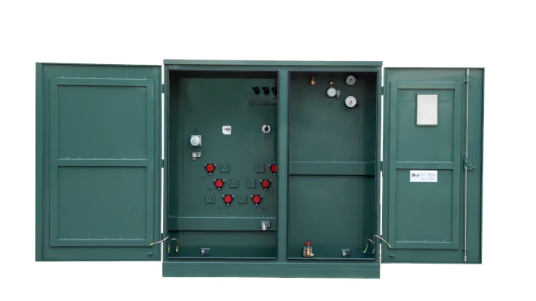
A zigzag earthing transformer is a specialized device used to provide effective grounding in three-phase electrical systems that do not have a natural neutral point. In many industrial and utility networks, delta-connected systems operate efficiently under normal conditions but face serious safety and protection challenges during ground faults. A zigzag earthing transformer solves this problem by creating an artificial neutral and enabling controlled fault current flow to earth.
Proper grounding is essential for electrical safety, equipment protection, and voltage stability. The zigzag earthing transformer has become one of the most reliable and widely used grounding solutions because of its efficient design and ability to handle ground faults without carrying continuous load current.
This guide explains how a zigzag earthing transformer works, why it is used, where it is installed, and how it improves the safety and reliability of modern power systems.
What Is a Zigzag Earthing Transformer?
A zigzag earthing transformer is a grounding transformer designed specifically to provide a neutral grounding point in systems where none exists naturally.
Unlike conventional transformers that transfer electrical energy between circuits, this transformer performs a protective function. It establishes a reference point between the electrical system and earth, allowing ground fault currents to flow safely and enabling protection systems to detect faults.
It is commonly used in:
- Delta-connected distribution systems
- Industrial power networks
- Renewable energy installations
- Medium-voltage utility feeders
The zigzag winding arrangement makes it uniquely suited for earthing applications.

Why Earthing Is Necessary in Three-Phase Systems
Electrical systems without proper earthing can operate normally during balanced conditions but become unstable during faults.
Floating Voltages
Without grounding, system voltages may shift relative to earth potential, stressing insulation.
Undetected Ground Faults
Fault current may remain too low for protective devices to operate.
Increased Safety Risks
Equipment enclosures may reach hazardous voltage levels.
A zigzag earthing transformer introduces a controlled grounding path that eliminates these risks.
Construction of a Zigzag Earthing Transformer
The transformer derives its name from the zigzag pattern formed by its winding connections.
Each phase winding is divided into two equal sections:
- One section connects to its own phase
- The other connects to another phase in opposite polarity
This interconnected arrangement creates magnetic balance while allowing zero-sequence currents to pass during faults.
Key Design Features
- No secondary load winding
- Neutral terminal available for grounding
- Balanced magnetic flux under normal conditions
- Designed primarily for fault duty operation
Because it carries little current during normal operation, energy losses remain minimal.
Working Principle
The zigzag earthing transformer behaves differently under normal conditions and fault conditions.
During Normal Operation
- Phase currents remain balanced
- Magnetic flux cancels within the core
- No significant current flows through the transformer
- Power losses are extremely low
The transformer remains largely inactive.
During a Ground Fault
When a line-to-ground fault occurs:
- Zero-sequence current appears in the system.
- The zigzag winding provides a return path.
- Fault current flows through the neutral grounding connection.
- Protective relays detect the fault.
- Circuit breakers isolate the faulty section.
This controlled response prevents damage and improves system safety.
Role of Neutral Grounding Resistor
A zigzag earthing transformer is often combined with a neutral grounding resistor.
The resistor limits fault current to a safe level while still allowing detection.
Benefits include:
- Reduced mechanical stress on equipment
- Lower arc flash energy
- Improved personnel safety
- Controlled thermal impact during faults
This combination is widely used in industrial electrical systems.
Advantages of Zigzag Earthing Transformers
Efficient Grounding Solution
Provides grounding without replacing existing transformers.
Compact and Cost Effective
Requires less material compared to full grounding transformers.
Improved Fault Detection
Allows protective devices to operate accurately.
Voltage Stabilization
Maintains consistent phase-to-ground voltage levels.
Minimal Operational Losses
Consumes negligible power during normal operation.
Common Applications
Zigzag earthing transformers are used wherever controlled grounding is required.
Industrial Facilities
Manufacturing plants commonly operate delta distribution systems requiring artificial neutral grounding.
Renewable Energy Plants
Solar and wind installations depend on proper earthing for inverter protection and grid stability.
Utility Distribution Networks
Utilities use zigzag earthing transformers to improve ground fault detection in medium-voltage feeders.
Data Centers and Critical Infrastructure
Sensitive electronic systems require stable grounding references to prevent disruptions.
Zigzag Earthing Transformer vs Other Grounding Methods
Different grounding solutions exist, but zigzag transformers offer specific advantages.
Compared to solid grounding, they allow controlled fault current levels. Compared to wye-delta grounding transformers, they are more compact and economical when only grounding functionality is needed.
They are often preferred when:
- Space is limited
- Retrofitting existing systems
- Dedicated grounding is required
- Load transformation is unnecessary
Design Considerations
Proper selection ensures reliable performance.
System Voltage Rating
Transformer insulation must match system operating voltage.
Fault Current Capacity
The transformer must withstand expected ground fault duration and magnitude.
Grounding Resistance Value
Determines how much fault current will flow.
Thermal Rating
Must tolerate heating during fault events.
Engineering calculations are essential during design.
Installation Best Practices
Correct installation directly affects grounding performance.
Important practices include:
- Installing near the system grounding point
- Maintaining low earth resistance
- Using adequately sized grounding conductors
- Providing ventilation for cooling
- Proper bonding of transformer enclosure
Poor installation may reduce protection effectiveness.
Maintenance Requirements
Although zigzag earthing transformers operate lightly, periodic inspection is necessary.
Maintenance tasks include:
- Checking grounding connections
- Measuring insulation resistance
- Inspecting for overheating or corrosion
- Verifying relay coordination
Routine inspection ensures readiness during faults.
Common Operational Issues
High Ground Resistance
Often caused by deteriorated grounding electrodes or dry soil conditions.
Overheating After Multiple Faults
Repeated faults may exceed thermal limits.
Protection Coordination Problems
Incorrect relay settings can delay fault clearing.
Regular testing helps prevent these issues.
Importance in Modern Electrical Networks
Modern power systems are evolving rapidly with distributed generation and renewable integration.
Zigzag earthing transformers support these changes by:
- Providing stable grounding for inverter-based systems
- Improving protection reliability
- Reducing transient overvoltages
- Supporting smart grid protection strategies
Their importance continues to grow as electrical networks become more complex.
Safety Standards and Compliance
Installation and operation must follow established electrical standards.
Typical references include:
- IEEE grounding guidelines
- IEC transformer standards
- National electrical codes
Compliance ensures safe and reliable system operation.
Future Trends in Earthing Transformer Technology
Advances in electrical engineering are improving grounding solutions.
Emerging developments include:
- Compact modular transformer designs
- Improved insulation systems
- Online thermal monitoring
- Smart protection integration
These innovations enhance reliability while reducing maintenance demands.
Conclusion
A zigzag earthing transformer provides a practical and highly effective solution for grounding three-phase electrical systems that lack a natural neutral point. By creating an artificial neutral and allowing controlled fault current flow, it improves electrical safety, stabilizes system voltages, and enables reliable protection system operation.
From industrial plants to renewable energy facilities and utility networks, zigzag earthing transformers play a critical role in ensuring safe and stable power distribution. Proper design, installation, and maintenance help organizations minimize risk, protect equipment, and maintain uninterrupted electrical operations in increasingly complex power systems.