


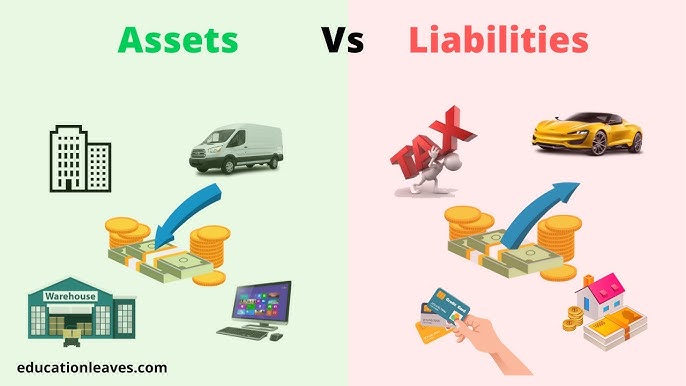
Understanding the difference between assets and liabilities is one of the most important concepts in personal finance and business finance. This knowledge helps individuals and organizations make better financial decisions, build wealth, and avoid unnecessary debt. Simply put, assets put money into your pocket, while liabilities take money out of your pocket.
This article clearly explains the difference between assets and liabilities, their types, examples, and why they matter for financial success.
What Are Assets?
Assets are things you own that have economic value and can generate income or increase in value over time.
Key Characteristics of Assets
Generate Income
Assets often produce cash flow, interest, or profits.
Increase Net Worth
They add value to your overall financial position.
Can Be Sold or Converted into Cash
Assets usually have resale or market value.
Types of Assets
Assets come in different forms depending on how they are used.

Tangible Assets
Physical Assets
These include items you can see and touch.
Examples:
- Real estate
- Land
- Machinery
- Gold
Intangible Assets
Non-Physical Assets
These have value but no physical form.
Examples:
- Patents
- Trademarks
- Copyrights
- Brand value
Financial Assets
Income-Generating Assets
These assets earn interest, dividends, or capital gains.
Examples:
- Stocks
- Bonds
- Mutual funds
- Savings accounts
What Are Liabilities?
Liabilities are financial obligations or debts that require you to pay money in the future.
Key Characteristics of Liabilities
Require Regular Payments
Liabilities often involve monthly or periodic payments.
Reduce Net Worth
They subtract from your overall financial value.
Carry Financial Risk
Interest and penalties increase the total cost over time.
Types of Liabilities
Liabilities are generally categorized based on duration and purpose.
Short-Term Liabilities
Due Within One Year
These require immediate or short-term repayment.
Examples:
- Utility bills
- Credit card balances
- Short-term loans
Long-Term Liabilities
Due Over Many Years
These usually involve larger amounts.
Examples:
- Home loans
- Car loans
- Student loans
Key Differences Between Assets and Liabilities
Cash Flow Impact
Assets
Assets generate income or appreciate in value.
Liabilities
Liabilities require ongoing payments and expenses.
Effect on Financial Health
Assets
Improve financial stability and wealth.
Liabilities
Increase financial burden and risk.
Role in Net Worth
Assets
Increase net worth.
Liabilities
Decrease net worth.
Assets vs Liabilities: Simple Comparison Table
| Feature | Assets | Liabilities |
|---|---|---|
| Definition | Things you own | Things you owe |
| Cash Flow | Brings money in | Takes money out |
| Net Worth Impact | Positive | Negative |
| Examples | Investments, property | Loans, credit cards |
Why Understanding Assets and Liabilities Is Important
This knowledge plays a major role in financial success.
Helps in Better Money Decisions
Smarter Spending
Understanding liabilities prevents unnecessary debt.
Investment Planning
Focus on acquiring income-generating assets.
Builds Long-Term Wealth
Financial Growth
More assets mean more financial security.
Reduced Debt Stress
Fewer liabilities lead to peace of mind.
Common Misconceptions About Assets and Liabilities
Is a House Always an Asset?
A house can be an asset if it generates income or appreciates significantly. However, if it only creates expenses, it may act like a liability in the short term.
Is a Car an Asset?
Cars usually lose value and require maintenance, so they are often considered liabilities rather than assets.
How to Increase Assets and Reduce Liabilities
Smart Financial Habits
Invest Regularly
Focus on assets that grow over time.
Pay Off High-Interest Debt
Reducing liabilities improves cash flow.
Balance Is Key
Strategic Borrowing
Some liabilities, like education loans, can help create future assets.
Conclusion
Understanding the difference between assets and liabilities is essential for building financial stability and long-term wealth. Assets help you grow financially by generating income or increasing in value, while liabilities reduce your wealth by requiring regular payments. By focusing on acquiring more assets and managing liabilities wisely, individuals can improve their net worth and achieve better financial control. Financial success is not just about how much you earn—it is about how well you manage assets and liabilities.
Frequently Asked Questions (FAQs)
1. What is the main difference between assets and liabilities?
Assets add value and generate income, while liabilities create expenses and debt.
2. Are all loans considered liabilities?
Yes, loans are liabilities because they require repayment with interest.
3. Can something be both an asset and a liability?
Yes, depending on how it is used, such as a house or business equipment.
4. Why are assets important for financial growth?
Assets help increase net worth and provide long-term financial security.
5. How can I improve my financial position?
Focus on building assets, reducing high-interest liabilities, and managing money wisely.